Podolsky legends.
(Malinovsky T.K.)
Introduction.
The village of Kupil is located in the upper reaches of the Southern Bug - there the river is born among ponds and lakes. Archaeologists who discovered ancient settlements nearby believe that people settled here at the beginning of our era. Herodotus, in his stories about Scythia, mentioned the Hypanis River (Southern Bug) and noted the beauty of the area near its sources.
Before the war, Jews, Poles, and Ukrainians lived together in Kupel. The town was a cultural center, where famous Jewish poets and writers were born. Its center, with its cobblestone streets, brick houses, cinema, and photo studio, looked no worse than a square in a big city.
Most of the inhabitants were engaged in rural labor. There were two collective farms in Kupel, a Ukrainian one and a Jewish one, which, unlike the Ukrainian one, had good profits and was among the most advanced.
Starting from July 1941, when German troops invaded, and until its liberation in March 1944, the town was looted, burned, and destroyed, and the Jews were gradually exterminated. Since then, Kupil, which was home to a galaxy of famous Jewish poets and writers, such as H.V. Bader, S.R. Goldenberg, A.M. Liesen, Tova Rubman, and Eva Lozdernik, has turned into a small village on the outskirts of Podillia, where not a single Jew lives anymore.
In March 1944, two weeks before the retreat, when the front line was already approaching Kupel, the Germans executed the last surviving Jewish family there. It was the Spiegel family, who were being hidden by their friends. Someone managed to inform the German authorities about them. Both of these families were shot.
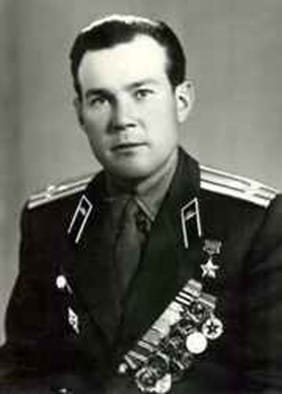
But their sons were fighting the fascists at the front, and the denunciation was to be repaid. Some legends about this revenge are associated with the name of Caesar Malinovsky. He himself became a legend for his fellow villagers, having received the title of Hero of the Soviet Union and many awards at the age of 23. After the war, the main street of the village was named in his honor.
- Caesar Malinovsky.
The son of Konstantin and Kazimir Malinowski, Caesar, the future hero, was born on December 8, 1922.
Having just finished ninth grade, he went to work on a collective farm. With the outbreak of war in 1941, he was mobilized into the army, and after the retreat of the Soviet troops, he was sent to the Saratov Tank School.
After graduating in 1942, Malinovsky fought near Leningrad as part of the 220th Tank Brigade, where he commanded first a tank, then a tank platoon. Showing courage and composure in battle, he received the Medal “For Courage” in August 1943. And after the breakthrough of the Leningrad blockade in January 1944, he was awarded the Order of the Red Star.
In one of the award letters, he was given the following description: “Taking part in a combat operation as a reconnaissance platoon commander, Lieutenant Malinovsky T. K. demonstrated exceptionally skillful leadership of the tank platoon, showed initiative and resourcefulness in carrying out his task. In everyday life, Malinovsky is modest, truthful, and deservedly enjoys the authority of his comrades. Ideologically sound, morally stable.”
Until the end of April 1944, the 220th Tank Brigade, in which Lieutenant T. K. Malinovsky fought, fought near Pskov. Then it was withdrawn to the reserve of the Leningrad Front and did not take part in hostilities until June. The tankers were engaged in repairing equipment and preparing reinforcements.
It was at this time that Podillia was cleared of Germans, and Lieutenant Malinovsky decided to visit his relatives. While traveling along the front roads to Kupil, he saw horrific pictures of war-ravaged towns and villages.
- Revenge.
In Kupel, revenge was expected, and according to legend, it was not long in coming. Malinovsky, as a scout, quickly found out who was reporting to the Germans. Having tied the informer with a rope to his saddle, he galloped down the street. This is how the Scythians once got rid of their enemies.
And he also took revenge for his physics teacher V.I. Veksler, who was killed in July 1941. When a local policeman, pushing and mocking, dragged him to the shooting, a young girl, who was his student, ran next to him and spat in the unfortunate man's face.
Malinovsky, having learned about the fate of his old teacher, found this girl and, tying her to a horse, dragged her through the village. She died in terrible agony.
The policeman who killed teacher Veksler was dealt with by another soldier, Mysha (Mikhailo) Schwarzapel. He found the villain and beat him to death in the same year of 1944.
These legends arose from the countless human losses in the war. The cruelty of the executioners towards their weak and helpless victims demanded revenge, which was attributed to such strong personalities as T. K. Malinovsky.
In reality, he was already an experienced commander - intelligent and prudent. Caesar Malinovsky, knowing how to keep himself in check, would not have resorted to lynching an informer or killing a spiteful girl.
Although this happened quite often at the front. On March 4, 1944, in the 220th brigade, where Malinovsky served, two officers – tank platoon commander Lieutenant Khomutov and tank commander Junior Lieutenant Khabibulin – committed premeditated murder under similar circumstances. They committed lynching. The military tribunal qualified this as a serious criminal offense, for which at the end of March 1944 they were demoted and sent to penal units.
- Reckoning.
For Malinovsky, the disaster that befell his native village and the entire country required immediate resistance, but not lynching. Returning to the front, he dreamed of only one thing - to meet the enemy as soon as possible. Caesar Malinovsky understood that from now on he would have no peace without the complete defeat of the Germans, because otherwise everything could happen again. And with each combat operation in which he participated, Malinovsky tirelessly approached his goal. He longed to conquer Berlin.
- The path to victory.
Fate gave him such a chance. At the final stage of the war in December 1944, the 220th Brigade became part of the 5th Shock Army of the 1st Belorussian Front under the command of Marshal G. K. Zhukov.
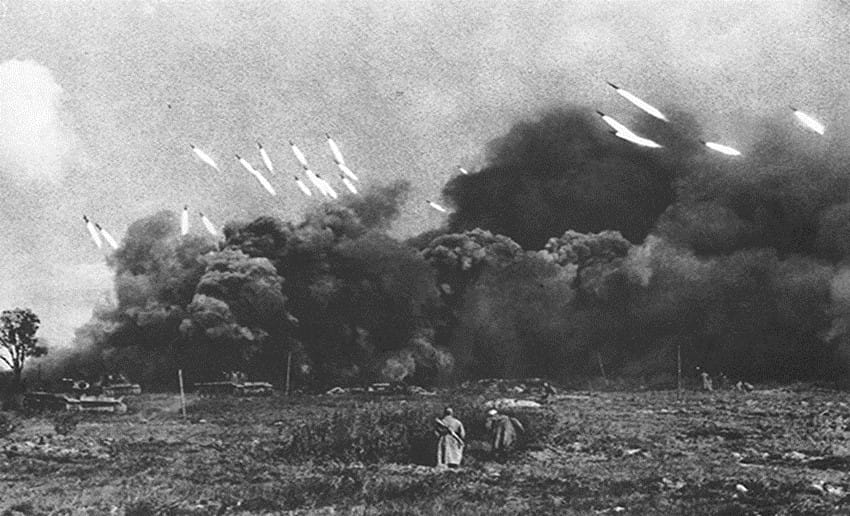
After the successful Vistula-Oder operation, which began on January 12, 1945, a direct road to Berlin was opened for the Soviet troops. Having distinguished himself in this operation, Caesar Malinovsky received the Gold Star of the Hero of the Soviet Union and the Order of Lenin. Having destroyed the equipment and manpower of the Germans, he captured the railway between Warsaw and Radom and held it until the approach of the main units. In this battle, Caesar Malinovsky was wounded, but he did not leave the tank and did not withdraw from the battle.
After treatment, he returned to his platoon and led them in expanding the bridgehead on the left bank of the Oder River, where a large German tank group was completely defeated. In one battle near Küstrin alone, the Germans lost up to 200 tanks.
On April 15, 1945, the troops of the First Belorussian Front began their assault on the German capital. On April 16, the 220th Brigade entered the battle for Berlin.
On the approaches to the Seelow Heights, searchlights were used in the first attack. On April 18, the Seelow Border was breached. The 220th Panzer Brigade and the 1054th Rifle Regiment approached Strausberg, the outer defense belt of Berlin. On April 21, they broke through to the borders of Berlin and began their assault.
Having destroyed twelve barricades with fire, the brigade with an infantry regiment broke through the German defenses and began an offensive in the central part of the city. The first to be captured was the Berlin railway station. To reduce losses and increase power and maneuverability on the streets of Berlin, assault groups were used in the following composition: an infantry platoon, a sapper detachment and five tanks.
On April 27, tanks of the 220th Brigade entered Friedrichstrasse, one of Berlin's main streets. On April 29, they took the Gestapo building. The Ministry of Aviation surrendered on April 30.
On the night of May 1, preparations began for the assault on the Imperial Reich Chancellery, the last stronghold of the Germans. The command post of the 301st Rifle Division and the 220th Tank Brigade was located in the building of the main post office. At 11:00, fire was opened from all positions. At 18:00, the garrison of the Chancellery was offered to surrender, but after the Germans refused, the assault was renewed.
On May 2nd at 2 a.m. the Red Flag appeared over the Reich Chancellery. The bunker and lower floors of the building were cleared of Nazis for several more hours. Everything was finished by 3 p.m.
After the battles for Berlin, the 220th Separate Tank Brigade was given the honorary name “Berlinskaya”. Near the Brandenburg Gate, a T-34 tank No. 300 was installed, which had passed with the brigade from Leningrad to Berlin. This tank could have belonged to Caesar Malinovsky, one of the 12 hero-tankers of the 220th Tank Brigade.
- In post-war Germany.
After the war, Caesar Malinovsky remained in the army, linking his future fate with it. In 1957, he graduated from the Military Academy of Armored Troops in Moscow. The country was gradually returning to peaceful life, and he again found himself in Germany, where he commanded the tank units of the Soviet Army.
Divided into several sectors, Germany no longer posed any threat. But it was necessary to finally rid the Germans of the desire to expand their living space.
At the Yalta meeting with Churchill and Roosevelt, Stalin proposed to gather 50,000 German officers in a concentration camp after the war and destroy them. But, noticing Churchill's negative reaction, he reduced his proposal to a joke. Therefore, the re-education of the Germans was carried out by less radical means. The four sectors into which Germany was divided were controlled by the Allied administrations, which ensured its complete, as far as possible, denazification and demilitarization.
In the Soviet zone (East Germany was formed in 1949, and in 1955 it became a member of the Warsaw Pact), military camps were islands of well-being for soldiers. The group of troops stationed there had their own factories, infrastructure, subsidiary farms, schools for officers' children, pioneer camps, sanatoriums, a retail network, officers' houses, etc.
One of the last places of service of Colonel Malinovsky T. K. was the military town of Krampnitz in the GDR, where he commanded the 343rd Heavy Tank Regiment. His entire post-war life was devoted to improving the level of training of the country's tank units.
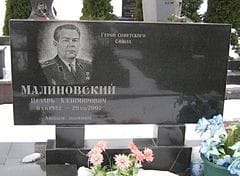
At the end of 1973, Caesar Malinovsky left the service. He received an apartment in Kyiv, where he settled with his family. He died on July 29, 2002 and was buried at the Kyiv cemetery "Berkovtsi". There, as a war hero, a monument was erected by the state to him.
Conclusion.
T. K. Malinovsky never forgot the tragedy of his native town of Kupil and those who died during the war. He took revenge for them, destroying the fascists from Leningrad to Berlin. In real life, the hero's revenge turned out to be more large-scale and effective than in the legends that told about him in Kupil.
Sources:
- Malinovsky Caesar Kazimirovich.
http://pobeda.poklonnayagora.ru/heroes/9475.htm
https://pamyat-naroda.ru/heroes/podvig-chelovek_nagrazhdenie46762233/
- 220th Separate Tank Brigade.
https://altyn73.livejournal.com/939999.html
http://raketchik.ru/geroi.php?kurs=156
- The town of Kupil.
http://kupel.net/content/teacher-veksler-death-and-avenge
http://volorada.org.ua/sub/kupil/istoriya/istoriya-sela-kupil/
Kilymnyk Larisa Mykhailivna tel. 0 98 45 95 344, Khmelnytskyi