

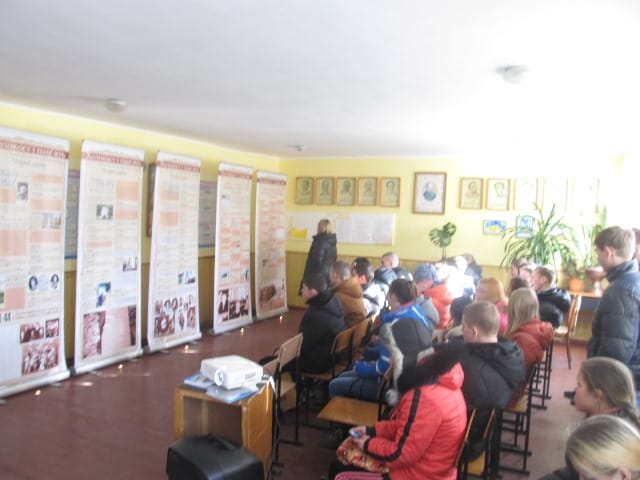
Once upon a time, the town of Derazhnya was a powerful Jewish center with a developed infrastructure. Time and circumstances made their adjustments, and the historical events of the 20th century almost completely ceased the existence of the community. The Jews who remained in Derazhnya receive assistance from the Khmelnytskyi Charitable Foundation "Hesed Besht", which is represented here by curator Oleksandr Voloshyn. However, the memory of former countrymen is preserved not only by the Jewish community, and this was one of the reasons why the employees of "Hesed" went to Derazhnya today.
In Derazhn operates DPTNZ "Derazhnya Professional Agrarian Lyceum", headed by a long-time friend of our Foundation - Mykola Vasylovich Cherkasky. The employees and students of the lyceum, on their own initiative, organize the cleaning of the mass grave of Jews shot by the fascists and their accomplices during the Second World War, located in the Germanov tract, on the outskirts of the city. A memorial sign and earthen mounds have been preserved here, which require constant care and cleaning. The land is overgrown with weeds, man-made structures are cracking under the influence of time and weather conditions. Volunteers from the lyceum consider it their duty to take care of preserving the memory of their former countrymen, so they actively mow unnecessary grass, collect garbage, trim branches and maintain the monument with stairs in good condition. For students, this is a privileged topic: only seniors have the opportunity to join this cause, which is held in high esteem here.
Given this fact, our organization could not simply take into account the good of other people. Here, sincere and friendly gratitude is necessary, since neither the local community nor the Foundation as a whole has the opportunity to care for the memorial on its own. On the Open Day, employees and volunteers of the Hesed Besht KhBF, who work in community and museum programs, came to the lyceum. A mobile exhibition "Holocaust and Memory" was set up in the classroom, which tells about the events of the catastrophe in the Khmelnytskyi region. The Foundation's information manager, Vyacheslav Nagnybida, conducted three Memory Lessons for students of different age groups with a demonstration of the film "On the Eve of the Catastrophe", provided to us by the Tkuma Holocaust Studies Center from Dnipropetrovsk.
The Lessons of the Holocaust explains to modern young people the reasons why they are now visiting the mass grave, answering the questions: how the grave appeared, why and who destroyed the Jews, why there used to be many Jews, and now there are few. At the same time, it talks about the Righteous Among the Nations of the World with specific names and stories of saviors directly from Derazhnya and summarizes why the Lesson is important even today - so that this never happens again.
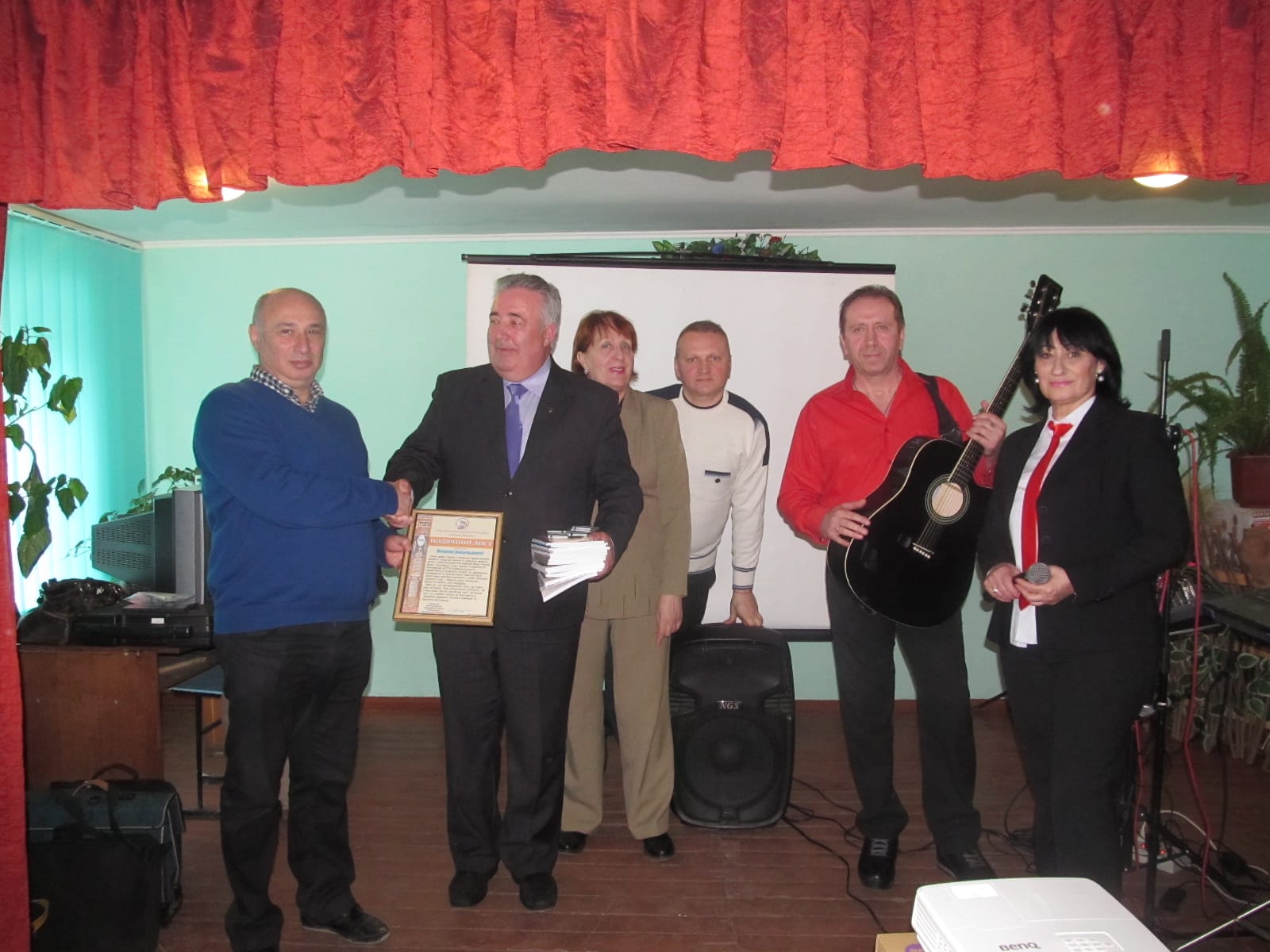
After visiting the exhibition, students and staff were invited to the assembly hall, where a concert program was held. The audience was treated to performances by members of the Hesedband musical group, Anatoly Muzyka, Vyacheslav Sydorenko, and Kira Nanba. The host of the concert program, Lyudmila Shvartsman, explained the purpose and reason for our visit and also expressed sincere gratitude for preserving the memory of the deceased. The Director of the Hesed Besht Cultural Foundation, Igor Ratushny, emphasized the importance of tolerant relations between all nationalities for the sake of mutual harmony and presented a letter of gratitude to the Director of the Derazhnya Vocational Agrarian Lyceum. In turn, Mr. Cherkassky spoke about his experience of cooperation with the Foundation and the importance of the charitable works that we do for society and showed a slide show of cleaning the memorial - the event that became the reason for today's meeting.
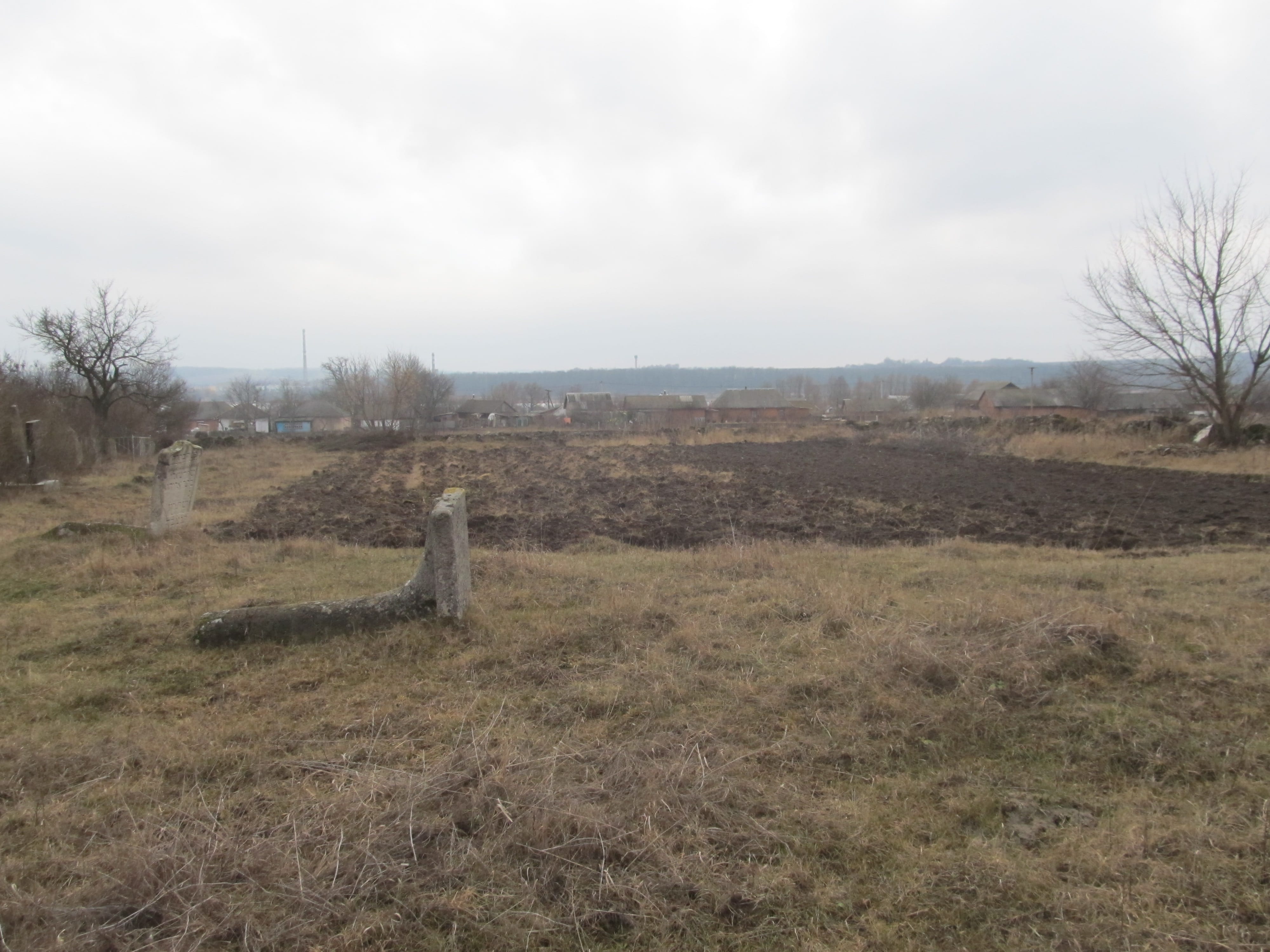
On the way back, the foundation's employees stopped by the old Jewish cemetery. In Derazhn, it is large and well-preserved. However, from the side that is not visible from the road, an unpleasant "surprise" awaited us - a significant part of the cemetery was plowed up for vegetable gardens, where matzevahs were not preserved. The question is surprising: "Who would want to harvest from a cemetery where human remains lie buried underground, not far from potatoes or cucumbers?" However, the question remains rhetorical, since the vegetable garden already exists and someone does take care of it. To put the cemetery in order, many resources are needed, which we are critically lacking.
This is how our visit to Derazhnya turned out. We met sincere and sensitive people, whose hearts are set on doing good deeds. And this means that goodness and tolerance do not leave our region, but are even more deeply rooted in society, leading it to new good achievements.
