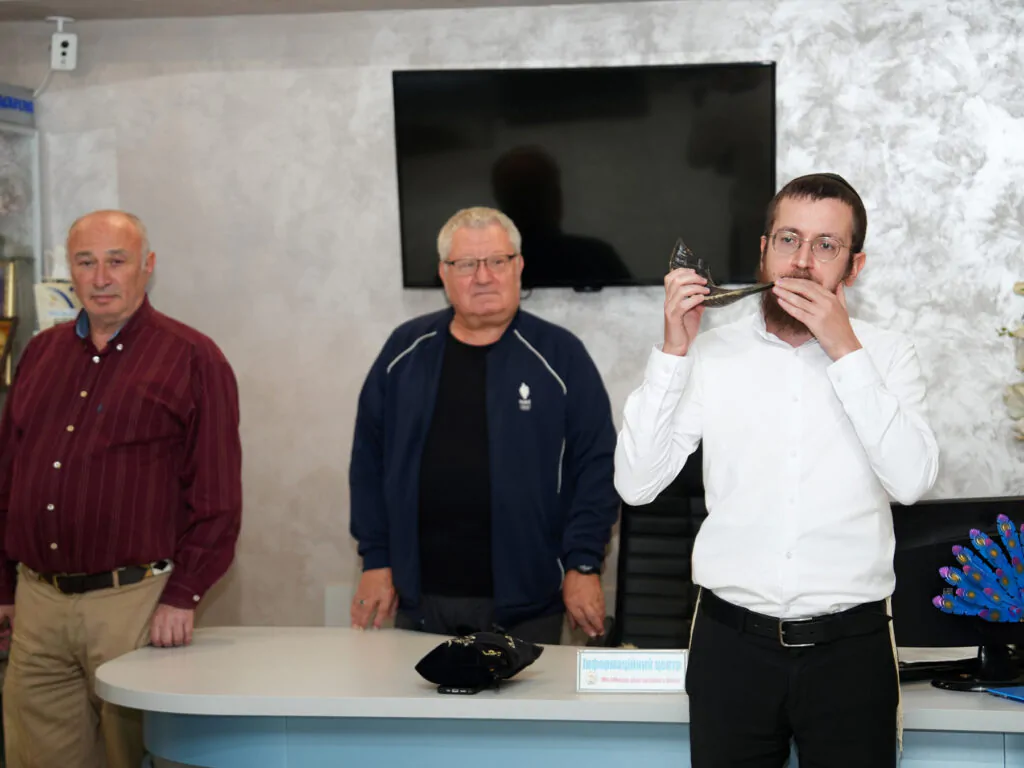
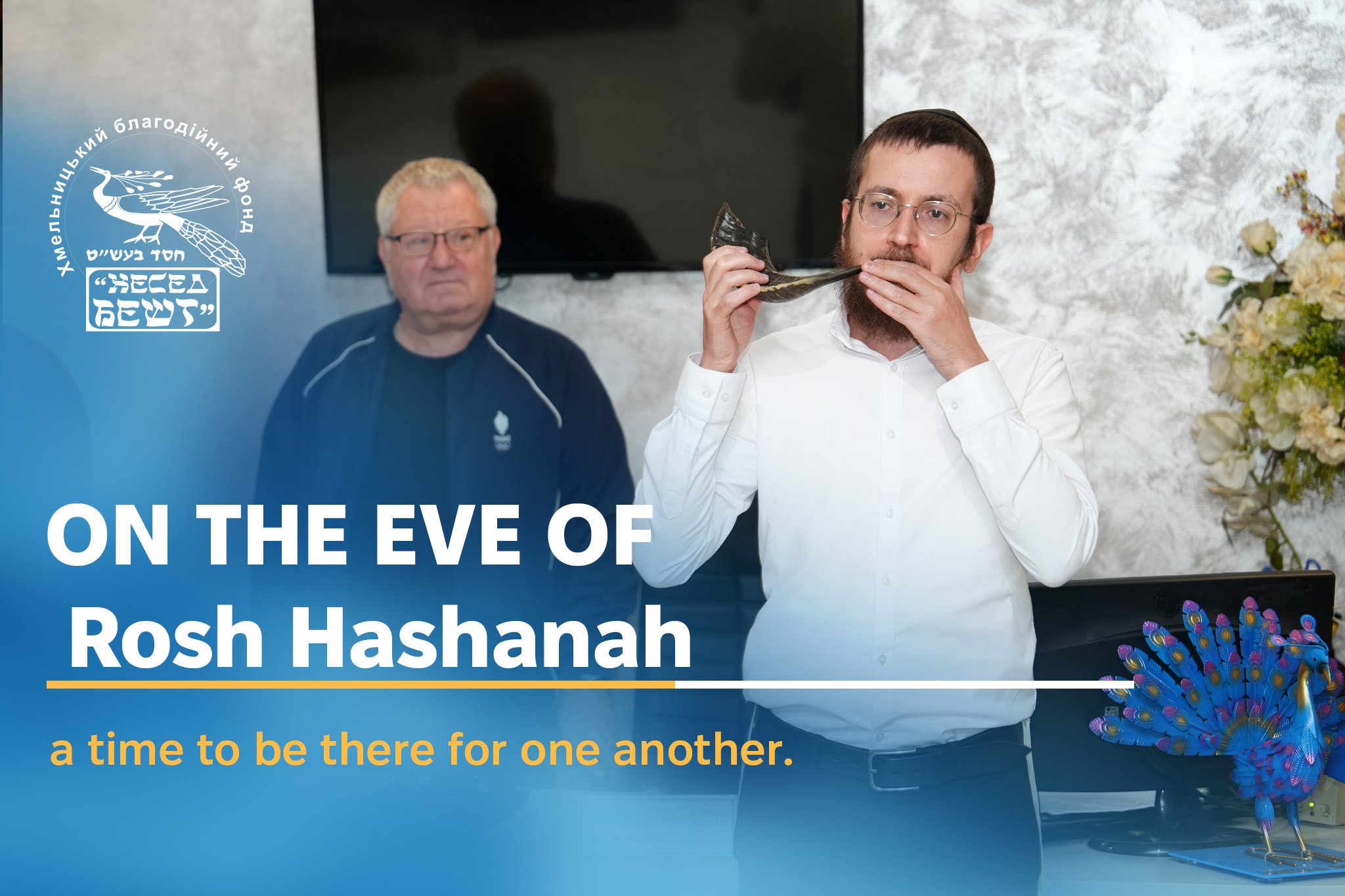
We have entered the month of Elul - a time when the sound of the shofar calls us to pause amid our daily affairs and listen not only with our ears but also with our hearts.
Have we done everything we could this year? Have we shown enough kindness to those around us? Whom have we supported, whom have we listened to, and whom do we have no right to forget? And, ultimately, can we do even more?
This week, our communities responded to these questions in their own ways.
In Lutsk, on the last Sunday of August, the community gathered at the site of the Lutsk Ghetto massacre. https://www.facebook.com/story.php?story_fbid=1395668729426326&id=100069496352465&rdid=xg6HeDxIIQz9MHdv# Here, you feel it particularly keenly: remembrance is our responsibility to those whose lives were brutally cut short simply because they were Jewish. We cannot change the past, but we can remember their names, talk about their lives, and not let history fade into silence.https://www.facebook.com/story.php?story_fbid=1394950146164851&id=100069496352465&rdid=Iy3GA5PALTSz3WeR#
In Kamianets-Podilskyi, Hesed’s case managers visit those in their care, make time to talk, listen, and try to identify their needs in a timely manner. Because sometimes caring simply means being there and reminding someone: you’re not alone.
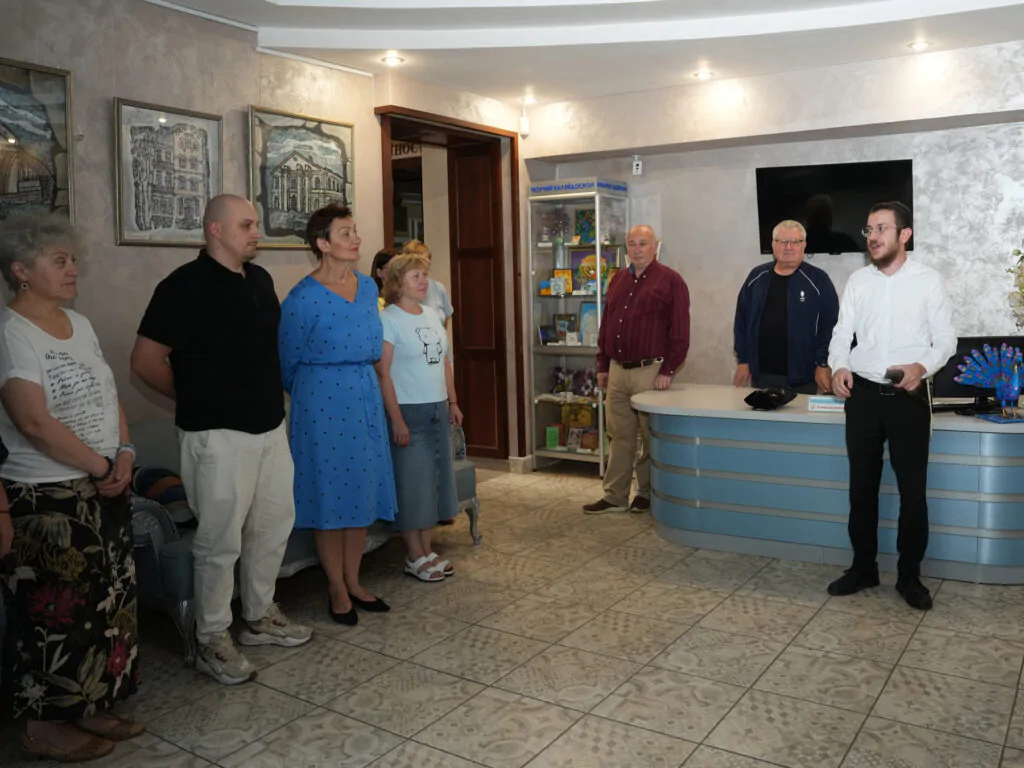
And this week, the “Mishpacha” project traveled further—to Polonne. During the warm gathering, it became clear once again: our community is one big family, united by shared values, memories, history, and traditions that are passed down. Because family is not only a shared past but also a future that we create together.
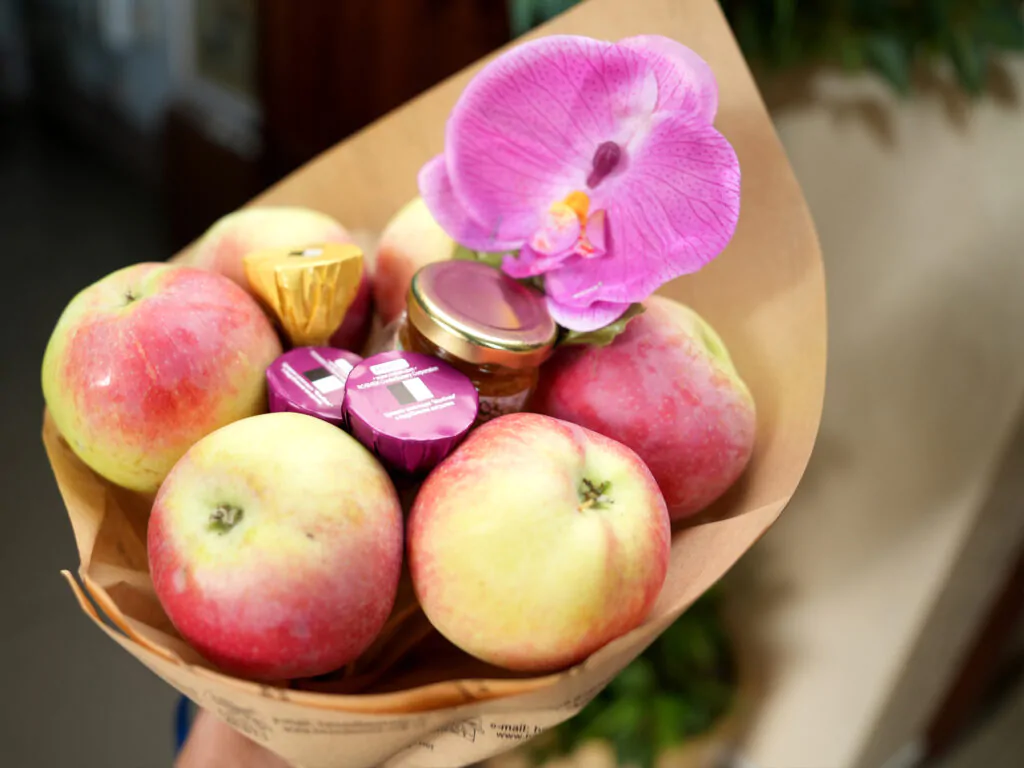
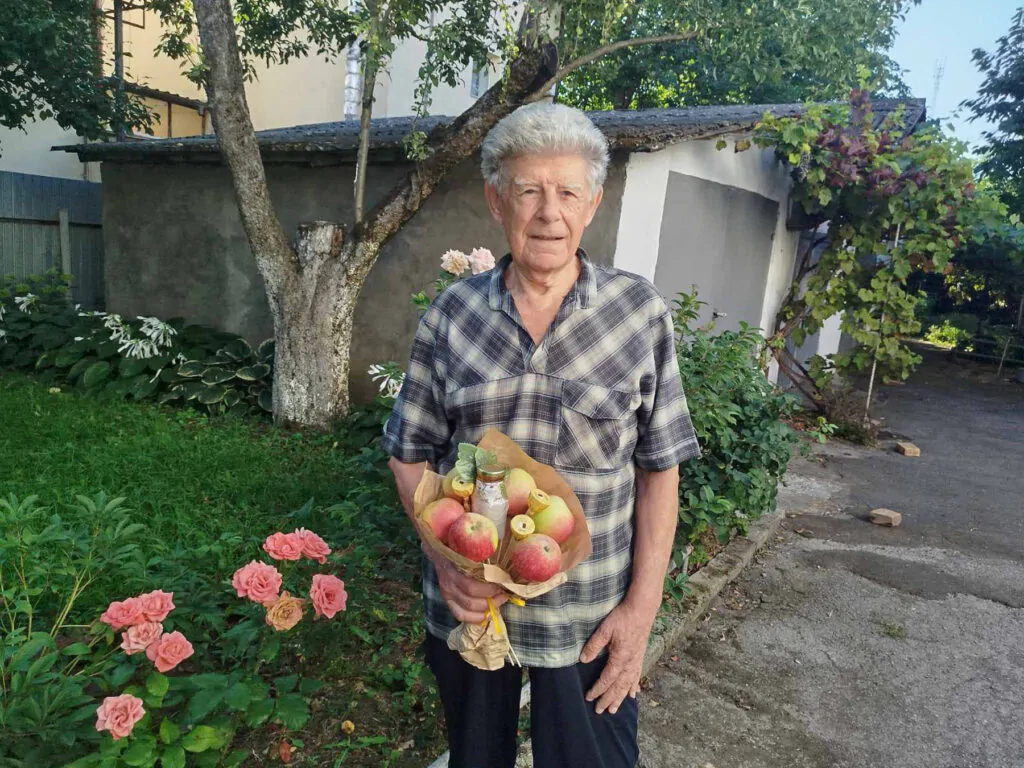
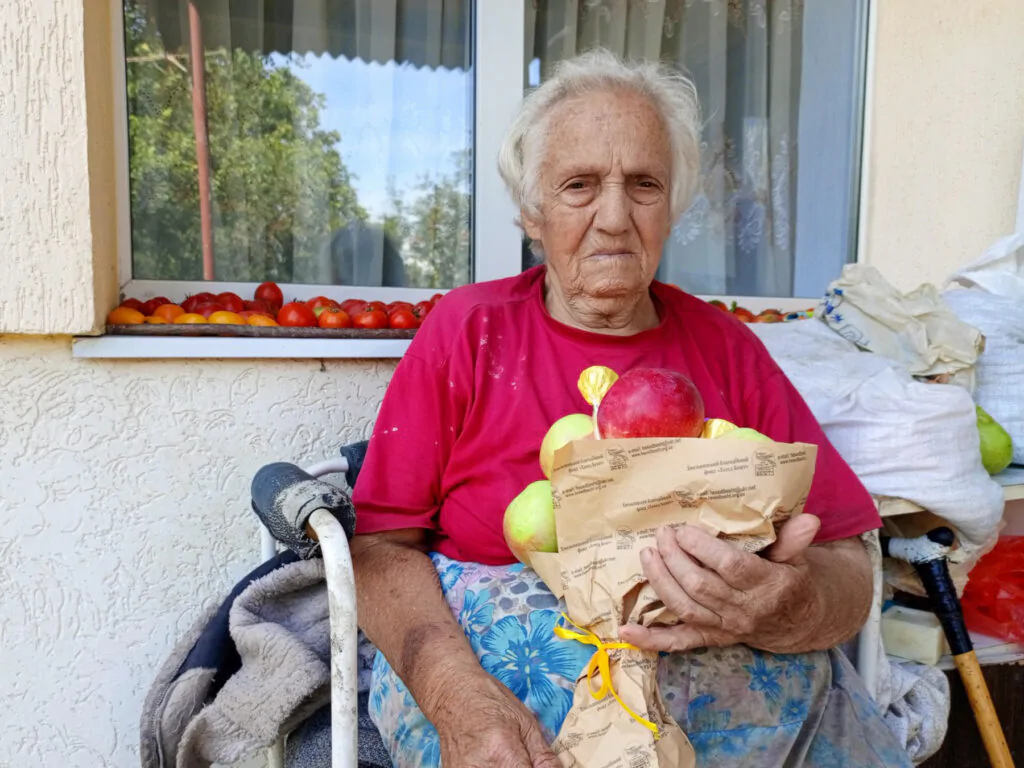
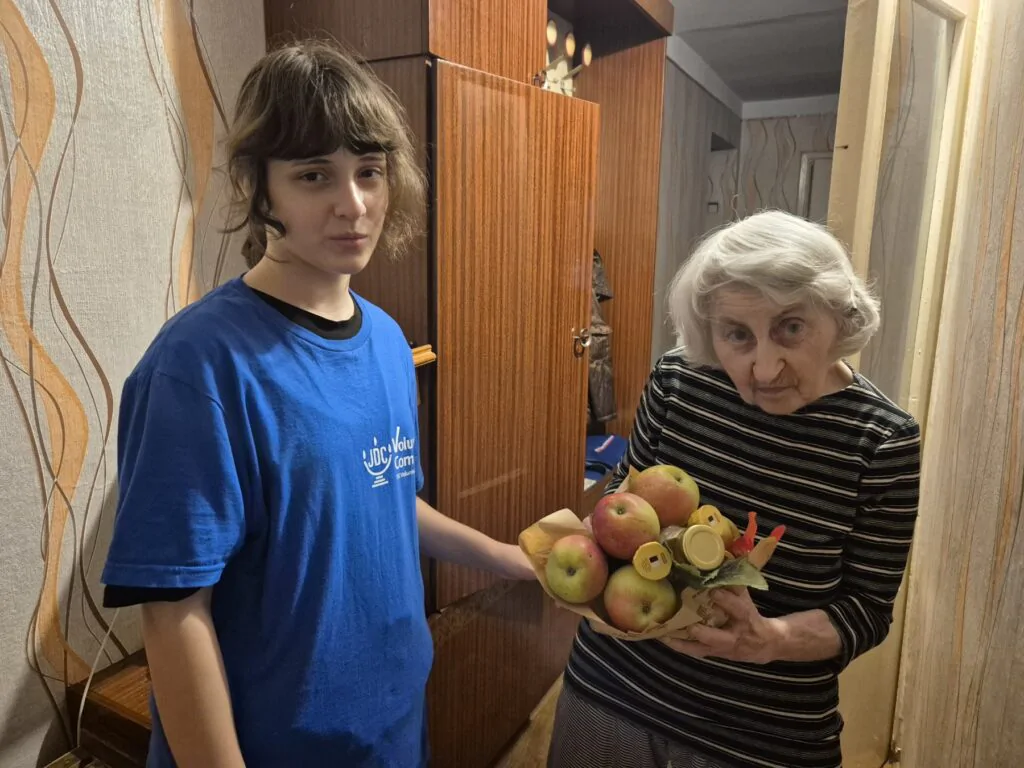
On the eve of Rosh Hashanah, this gesture takes on a special festive meaning. At various branches of the Foundation, beneficiaries are presented with bouquets of apples—a warm token of care and a wish for a sweet new year.
In Ternopil, women are already creating the holiday themselves: they’re discussing the menu for the Rosh Hashanah baking contest and making greeting cards. Because a holiday isn’t just what we’re given—it’s also what we create with our own hands for others.
In Rivne, those hands had a particularly “apple-themed” mission. As part of the project, volunteers made jam from “paradise” apples. Hole by hole, toothpick by toothpick—with patience, laughter, and good cheer. Because kindness can also be fun and very homey.
And in Khmelnytskyi, it literally grows out of the ground.
As part of the “Food Security” project, volunteer Svitlana Kyryliuk brought a harvest from her garden to Hesed—vegetables and fresh raspberries. In every bag—time, hard work, generosity, and a desire to share.
And the spirit of kindness continues to spread here: some people bring fruits and vegetables from their gardens, others come to prepare charity meals with them, and still others receive not only food but also a sense of the warmth of a community that cares for everyone.
Perhaps this is exactly what the shofar’s answer looks like.
Kindness doesn’t necessarily begin with a grand gesture. It can start with a memory, a visit, an apple you grew yourself, a postcard, a pot of jam, or a plate of hot lunch.
For 27 years now, “Chesed Besht” has been strengthening the community around shared values—family, history, memory, tradition, and helping others. Because a community becomes strong when we take responsibility for one another. Because the future lies only in compassion.
And when the shofar sounds, let each of us ask ourselves: What else can I do for others?
May the new year be sweet and peaceful, and may kindness, warmth, and compassion multiply in our communities.