
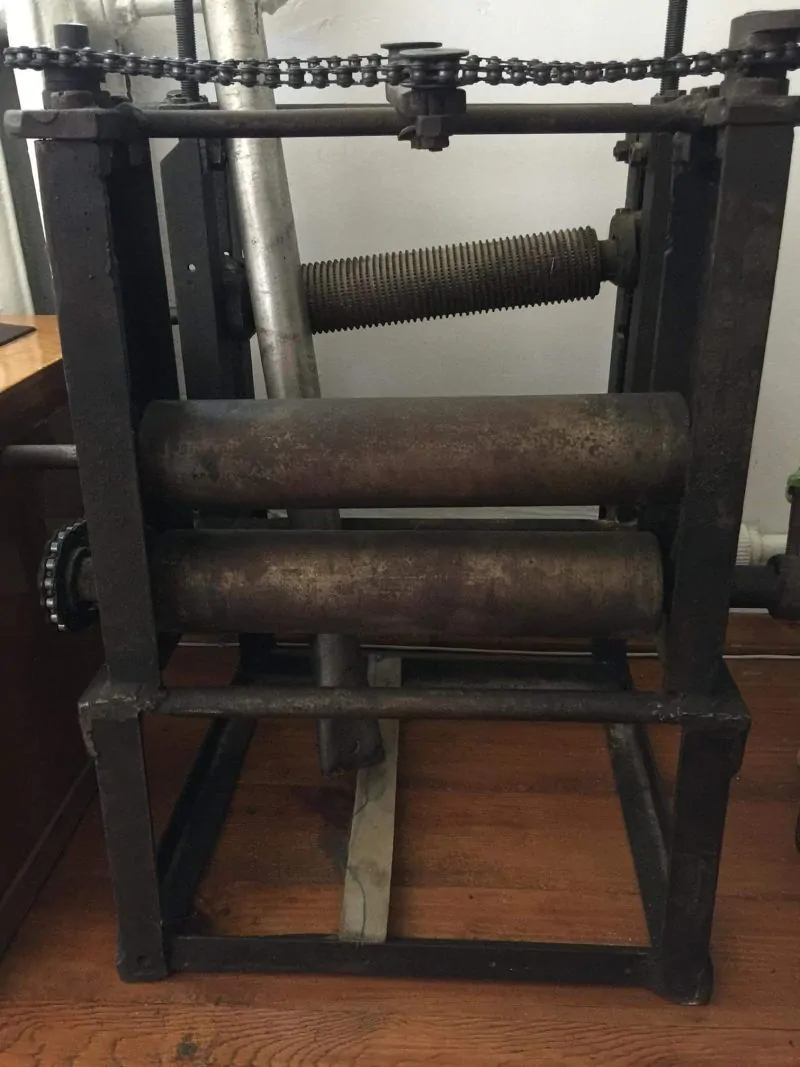
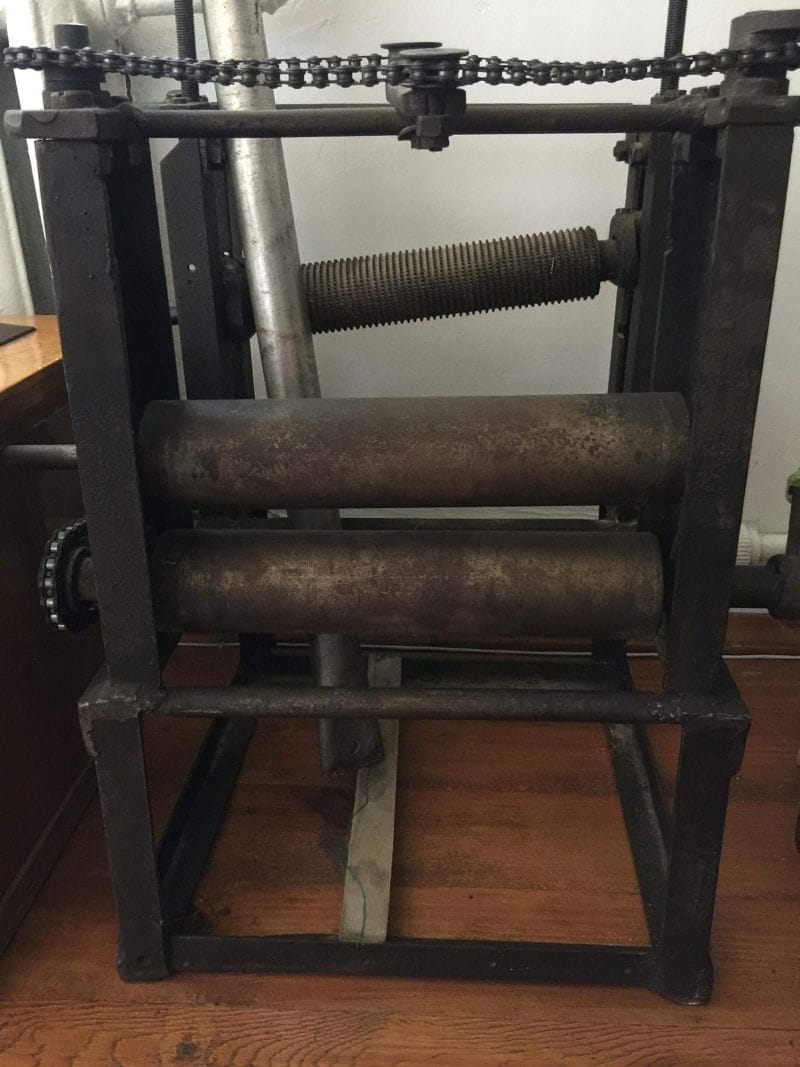
Among the exhibits of the Shepetiv Museum of Local Lore is a mechanism that attracts the attention of visitors with its strange design. This is a device for making matzah, it was donated to the museum by Alla Semenovna Melts in 1999. Matzah is eaten in memory of the fact that the Israelites baked unleavened cakes during the exodus from Egyptian slavery. Matzah can be rectangular or round in shape, and is made from dough, the fermentation of which islo interruptedthere areThe only ingredients in matzah are flour and water. The entire process from preparing the flour to baking should not exceed 18 minutes.
In 1838, the Frenchman Isaac Singer invented the first matzah-making machine, which was the subject of much controversy. Rabbis debated the spirituality and kosher nature of machine-made matzah, and many were against mechanization in such a delicate matter. After all, matzah must be made in extremely clean conditions. Is it possible to clean the mechanism between bakings so that not a single crumb from the previous bread gets into the new dough and causes it to leaven? The question is… In addition, some rabbis believed that machine-made matzah could not be consistent with Jewish law, since a person does not have the ability to control each stage of this process.
But others believed that machine-made matzah was better, bat the cooking process is accelerated, so the likelihood of the dough rising is much lower. Eventually, the use of machine-made matzah was permitted, although ultra-Orthodox Jews use only handmade matzah throughout the holiday of Passover.
In 1888, Lithuanian immigrant Dov Behr opened the first matzah factory in the U.S. state of Ohio. Taking the surname Manischewitz, he named the factory the B. Manischewitz Company.
