
 This article is the work of geographer, writer and author of articles in Shalom Aleichem newspaper, Georgy Barenboim. It is posted on the website of the Horodok Central District Library, where you can go by following the link in the article. The materials for the writing were provided by Raisa Omelchenko, an employee of the Hesed Besht CBF. The article broadly and colorfully reveals to us the history of the Jewish community of Gorodka, which we suggest you dive into without delay!
 The original article can be found at this link.
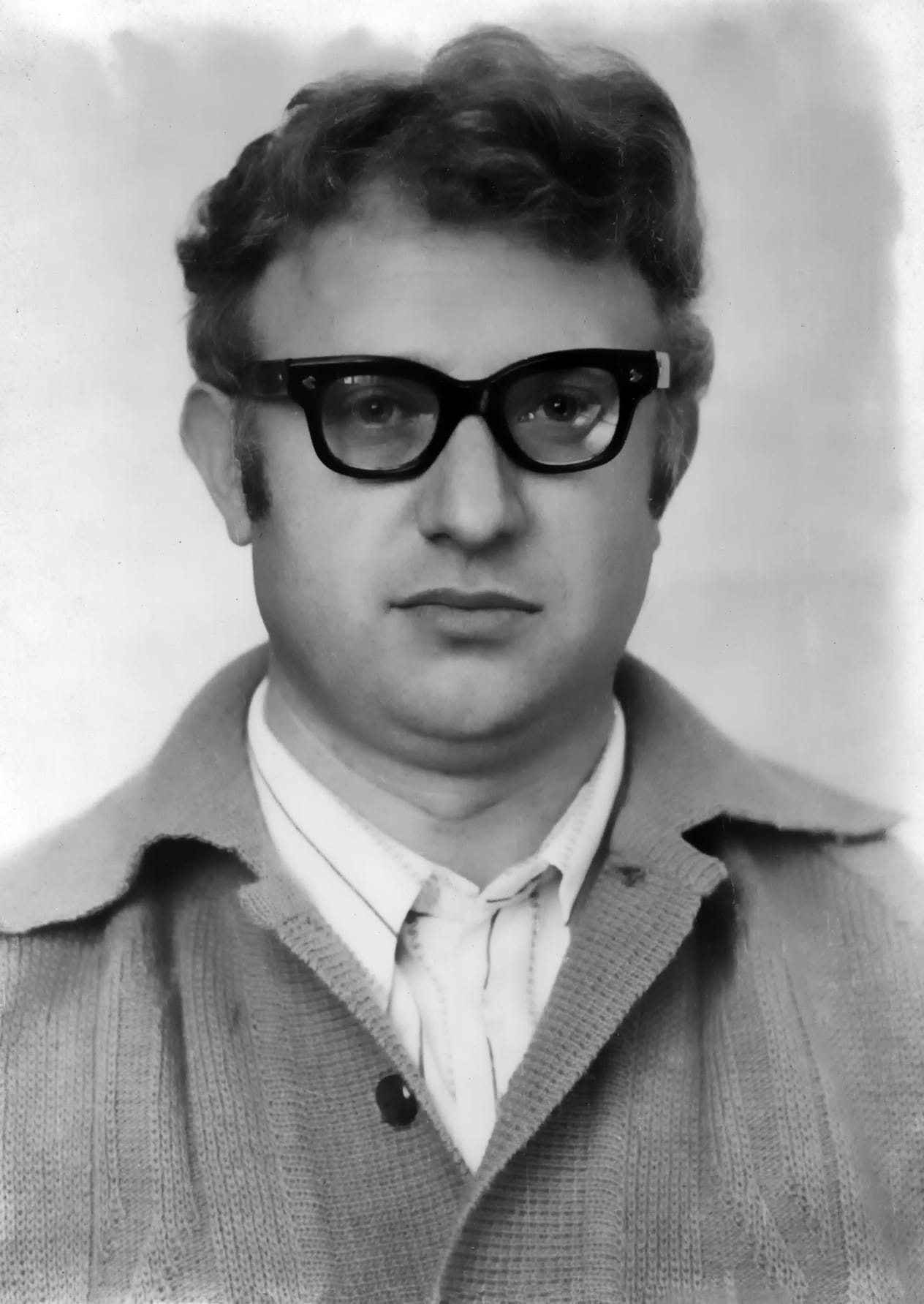 About the author. Georgy Borisovych Barenboim is a native of the town, a public figure, encyclopedically educated, with a higher engineering education. One of the brightest representatives of the engineering and technical elite of Horodochchyna and Podolia, who created and increased the industrial potential of the region in the post-war period. Professional achievements are evidenced by the fact that Georgy Borisovych's portrait has more than once decorated not only the Board of Honor of his native Horodok sugar factory, but also the district. He was twice elected a deputy of the district council. Activist of public life, cultural development, sports of the city and district. Patriot of Gorodka, the labor team of his enterprise, where his development from engineer to technical manager of the plant took place. Kindness, a sensitive attitude towards people made him an authoritative and respected person, whose opinion is listened to. Until now, Georgy Borisovych is, as they say, the soul of any company. Many consider him the keeper of the history and traditions of one of the largest sugar enterprises in Khmelnytskyi. Therefore, he has many friends of the most different nationalities - Ukrainians, Poles, Jews... When the occasion is convenient, he likes to give them his humorous and very accurately reflect the character of this or that friend, comrade. He is over 70. But, as the song says "...I'm in the road, I'm in the way". He reads a lot, researches the history of the Jewish community of the region, his genealogy, communicates with different people, is an active member of the Khmelnytskyi regional Jewish community "Hesed Besht". His local history publications were published in the literary and journalistic collection "Shtetl" (2013), and then an expanded version in the Horodok district newspaper "Horodotsky Visnyk". This version is offered to the reader.
From craftsmanship...

Our land healed the wounds inflicted on it by the invasion of the Tatar horde. Lithuania also ruled here in the fourteenth century. And since 1430, Podolia was under the rule of the Polish Kingdom.
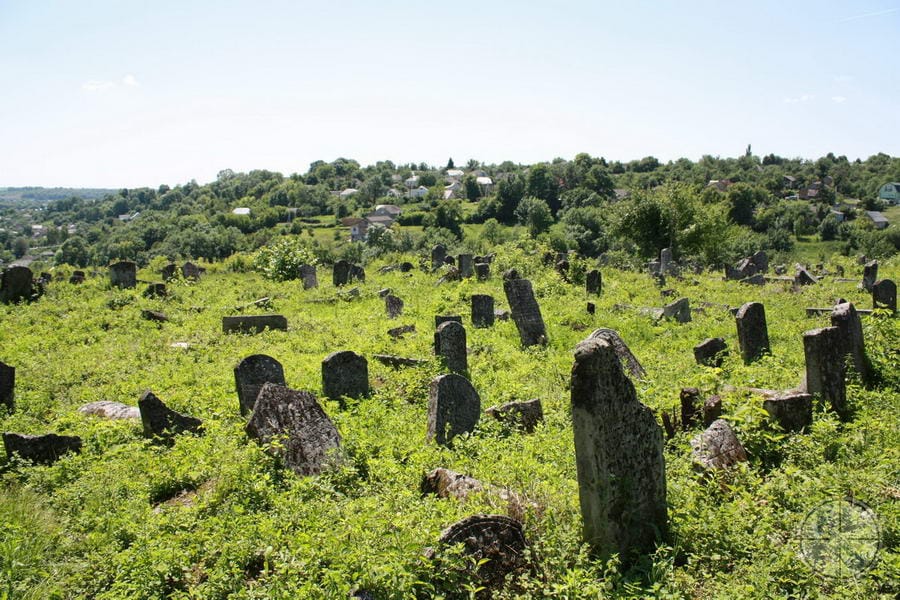
The town got its name during the time of the Lithuanian prince Fyodor Koriatovych, who gave several settlements on the rivers Smotrych and Trostyanets to the "servant man" Bedrich. Bedrich built a town (town), hence the name - Bedrichov Horodok. In the acts of the 15th century, the settlement appears under the names of Grudek, Grudok and Novodvor, from 1530 - Horodok. By the way, in the second half of the 15th century one of the representatives of the Bedrikhov clan is Nikolay (the first Kamenets castellan), mentioned as the owner of Ploskirov (Proskurov). Kastelian is the administrator of the castle, fortress, who is responsible for security, defense, collection of taxes and tributes. Already at that time, in terms of ethnicity, Jews made up a certain part of the townspeople. The bulk of the Jewish population appeared in Podolia in the 15th century. If we take into account the size of the Jewish cemeteries in Horodka and Satanov, we can safely assume that Jews have appeared in them since their foundation.
In 1550, Turkish janissaries completely destroyed Gorodok, exterminated and enslaved a significant amount of the population.
 Since 1578, the town has been in the possession of the Zamoyski magnates, who employed 28 craftsmen, including 13 locksmiths, 3 tailors, blacksmiths, and blacksmiths (merchants of honey and beer). Zamoyski ruled the town almost until the end of the 18th century.
The end of the 18th century was a turning point for Podolia in general and Horodok in particular. After the third division of Volhynia (1795), the territory of Right-Bank Ukraine up to Zbruch was ceded to Russia, and Horodok became the district center of the Podolsky District.
Local manufacturers, preserving the traditions of former craft corporations, waged a persistent struggle with the owners of the town for the preservation of guild rights. Thus, in 1834, Christian and Jewish artisans of the pottery, sewing, weaving, and leather workshops complained about the violation of the artisanal rights by the owner of the town, Baroness Heismar. Their struggle for their rights is explained by the centuries-old tradition of the guild structure in the city. The Jews in Gorodka were engaged in various activities: farming and renting estates, sugar making, beer and honey brewing, grinding flour, being cabbies, tellers. A special place was occupied by trade - drinking, shop, wholesale, meat, forestry, and others. Not many, not few - 65 % all craftsmen were Jews.
It is known that at the beginning of the 19th century a tobacco factory operated in Horodka, the quality of whose production was no worse than foreign ones.
 In 1841, several master silversmiths, all of them Jews, received a certificate for the right to practice jewelry. The arrival of a mass of Jewish craftsmen - silversmiths and goldsmiths - gave Podolia a "second wind" to the guild system, and this gave Baroness Heismar the opportunity to set up a factory for gilding and painting porcelain objects in the town, which were specially brought from Karlsbad and Prague.
…To the factories
The most profitable enterprise of Gorodka was a sugar factory built in 1839 by Baron Heismar, general of the cavalry, heir to the ancient German baronial family, son of the chamberlain of the Prussian court. The cost of production of the sugar factory was higher than the cost of the entire factory production of the province - 60 thousand rubles annually.
Jewish merchants had a significant profit at the sugar factories. They supplied the plant with firewood, lime, bone coal, cloth and others. Jewish merchants engaged in speculative operations for the delivery of sugar to refineries, financed the production at significant interest (now it is called  investment). Sometimes Jewish middlemen supplied workers to sugar factories and had a percentage of their earnings.
In 1870, the Gorodok Shareholders' Association was created, which in 1871 bought the sugar factory from the bankrupt Baroness Geismar. The further successful work of the enterprise is indicated by the award of the World Exhibition in Paris (1889), which was awarded for the high quality of the production of the city's sugar factories.
Here is a list of Jews who were permanent employees of the Horodotsk sugar factory (1919): Marants G.M., Kalmenson I.L., Kepelman F.M., Vygnanker AA, Shuhgalter U.L., Berkovich Y.H., Klein E.F., Halperin Sh.M., Averbukh M.F., Kryz I.M., Khramoy V.D., Grossman M.O., Kats M.M., Hershkovich I.B., Rafalovich I.D., Melman, Landa, Vaksman, Bronshtein, Zusman, Nyrenberchyk G.D..
In 1924, the Gorodotsky Sugar Factory, which employed 1,200 workers, produced 600,000 poods of granulated sugar (9,600 tons).
In 1894, along with the sugar factory, there were 6 brick, 2 tile, 4 pottery, 10 leather, 1 rope, 2 candle-wax workshops, a sparkling water factory, 7 grain mills, 6 forges, 2 horse straw cutters, and 3 wax mills. There was also a small brewery owned by Baba Kats, leased by Ita Silberman.
At the end of the 19th century, Horodok was the center of Horodok Volost and belonged to Sergey Nikolayevich Vinogradsky, an outstanding microbiologist, the founder of ecology microorganisms and soil microbiology, a star of the first magnitude in world microbiological science together with Louis Pasteur and Robert Koch. After scientific activities in St. Petersburg, Strasbourg, Paris and Zurich, he settled in Horodka due to his health, where he deals with the problems of agriculture and soil science.
At that time, the town was one of the most industrially developed in the region, although only about 8 thousand people lived here. At that time, sugar, iron foundry, and mechanical factories (director Efimov AA), as well as 4 water roller mills (tenants Mordko Mendelblag and Frima Grinberg) operated in Horodka.
In 1895, dentist Matus Mendelevych Oksman and practicing physician Vladimir Davydovych Hramoi worked in Horodka.
The documents of 1907 give us the following information
about merchants and industrialists of the town:
– pharmacy products – P.I. Naiman, Blinder Shmul, Gershman Hersh;
– groceries – haberdashery – Shiher Khava, Beigelman Dvoira, Gelman Iosif, Shreiberman Srul;
– iron – I.M. Zilberman;
– gold and silver products – H. Sh. Rabynovych;
– books – Harber Sura;
– photography – Katya Irlykh, Leibman Volko;
– wine – Wolfzun Inda, Goldfarb Hytlya;
– leather goods – Schwartz Moshko;
– forest warehouses – Tsatska Itsko;
– manufacture – Halperin Khava, Grynboim Ovshiy, Dantzis Beila, Kats Shulym, Shukhalter Ruhlya,
– sewing machines – Felsteiner Haim.
According to indicators of industrial potential, the number of enterprises and the number of employees in 1909, the town took the 4th place in the province, ahead of the provincial town of Kamenets-Podolsky, the district towns of Balta, Letychev, Lytyn, Novaya Ushitsa, Yampol, Bratslav, Olgopol.
At the turn of the ages
At the beginning of the 20th century, Gorodke had: one Orthodox church, a church, two synagogues (stone and wooden), six Jewish prayer houses, a Catholic chapel, Orthodox, Catholic and Jewish cemeteries. By the way, the synagogues or "Bozhnyts" of the town satisfied both religious and secular needs of the community. In synagogues, the court of the congregation always gathered. Sometimes the synagogue served as a shelter for wandering co-religionists.
In the ethnic structure of the population of Gorodka, the Jewish community made up more than 36%, second only to the Polish (48%). A little more than 15 % residents were Ukrainians. In total, there were 6,980 people of different nationalities and religions in Horodka. It should be noted that, according to Russian laws, Jews have always belonged to the city class. More than 65 % of all Gorodok artisans were Jews.  Name lists of employees, permanent foremen, duty workers and workers of the Horodok sugar factory and the local post and telegraph station for 1919 have been preserved in the state archives. It was not difficult to establish, for example, the ethnic composition of the workers of the sugar factory. In particular, if Poles and Ukrainians predominated in terms of numbers in the working environment, Jews were among the employees (62%). The following facts gleaned from archival sources speak of active political events in Gorodka at the beginning of the 20th century, in which the Jewish population was also a participant.
In the first days of the October Revolution in Gorodka, they clearly decided on the government. Already in March 1917, representatives of all  social classes, democratic organizations, various political parties united in one local executive committee. They even delegated three of their representatives to the Council of Public Organizations under the Kamenets District Commissioner of the Provisional Government.
The ethnic composition of the town was reflected in the results of the elections to the Ukrainian Constituent Assembly, which took place in Horodka on January 31, 1918. Second place after the Podolsk Polish district list (1505 votes) was taken by the Jewish National Electoral Committee, which was supported by 830 townspeople, the Bund -165 voters, the United Jewish Socialist Party - 3, the Jewish Social Democratic Labor Party - 1 vote.
At that time, it was the Ukrainian government that promoted the broad development of self-government of national minorities. Thus, the Horodok Jewish Community (EO) held its elections in the first half of 1918. The following year, in October, elections were held for a new composition of the Executive Committee. The Jews of the town supported the initiative of the Kamenets EO, which was the largest in the liberated territory of Ukraine (second half of 1919), to convene the All-Ukrainian Congress of Jewish Public Councils.
There was freedom of activity of political parties of national minorities. For example, on December 1, 1917, the Zionists staged a play on a religious theme in Horodka. The Bundists wrote about this in the Volkszeitung newspaper.
The exception was the Hetmanate period. In September 1918, residents of the town, Hershko Sobol and David Grinboim, were imprisoned for belonging to the Bund. By the way, the organization of the Bundists functioned at the local Zionist school, which was the reason for its closure.
It should be emphasized that the attitude of the Jewish community itself to the active subjects of the October coup it was ambiguous. So, in March 1919, the Jewish population of Gorodka collected money and bought 50 pairs of underwear for Ukrainian soldiers. And three months later, on July 7, local Jews shot guns from the windows and threw bombs into the backs of the retreating Ukrainian soldiers. During the investigation, it was established that the majority of Jews supported the Bolsheviks and opposed the establishment of independent Ukrainian power in every possible way. The public consciousness of national minorities was not ready to accept the Ukrainian idea. Open hostility was often manifested. The reasons for this were anti-Jewish excesses, pogroms , robberies, both on the part of the Ukrainian authorities and the Bolsheviks. Here are examples: on February 2-3, 1918, 165 Gorodok Jews were robbed by Krasnoyarets for the sum of 118,246 rubles. Under the hetmanate, 4 guards injured I. Godlys and his wife. Under the Directory, two pogroms were committed by Ukrainian soldiers, and in June 1919, a contribution was imposed on the Jewish population. Moreover, on July 7, 9 Jews died as a result of a bloody pogrom by Petlyurites in Horodka.
 Despite the mistakes made, and even the criminal actions of individual representatives, the Ukrainian government tried to fight pogroms and looting. Three residents of the town were shot for looting. Such actions strengthened the confidence of the Jewish population in the UNR government. The Jews of Horodok asked to leave the Ukrainian military to protect the town from various gangs.
For Jewish communities, the outcome of the civil war was tragic. Many Jews died, many children were orphaned. Some Jewish families emigrated from the country. Almost all Jewish property was looted or destroyed. The large and middle Jewish bourgeoisie was completely liquidated, the basis of the life and livelihood of artisans and small traders, who together made up the overwhelming majority of the Jewish population, was undermined. In such places as Horodok, 30-40 % of the Jewish population turned out to be unemployed.
In 1921, Soviet power was finally established in Horodka. Industry was gradually rebuilt and developed. In 1922, a local power plant was launched. By October 1924, 405 workers were already working at the Chicherin sugar factory, and the annual production of granulated sugar reached 180,000 poods (2,880 tons).
Cultural and educational life was revived. The first light of enlightenment and culture in Gorodka was a reading room for adults, located in 1927 in a small house. Kleiman Isaak Borisovych (my wife's grandfather) was in charge of the reading room. In the same year, the first graduation of the Horodok political school took place from among the youth, the first Komsomol members. Most of them are representatives of the Jewish community of the town.
Two Jewish schools functioned in Horodka in 1915-1920: Bunda and Zionistskaya. Subjects were taught in Hebrew (Yiddish). The state did not allocate money for the maintenance of schools.
In December 1920, a seven-year Jewish school was established on the state budget. In 1927, 300 children in 7 groups (for girls and boys, both separately and together). Eight teachers taught.
The establishment of Soviet power also brought positive changes in the life of Jewish communities, but only on the basis of communist ideology. Jews were given the widest possible access to government bodies, party bodies, the army and the security service. The flowering of Jewish culture and education in the Yiddish language began.
But it didn't last long. Persecution of figures of Jewish culture, persecution of Judaism and religious traditional Jewish education began.
The turbulent 1930s brought further sad corrections both to the fate of people and to the lives of the local minorities. In connection with the construction of socialism and the creation of the "new Soviet man", the educational, cultural, and religious spheres of ethnic communities collapsed. So, on January 12, 1931, a meeting of citizens of the center of the town of Horodok was held, which was attended by 176 people. The members of the presidium of the assembly: Kleiman Itsek, Vdovokhava Aron, Goldman Perlia, Sukhshtaber Solomon, Shafir Khana, Zimberg. They heard: about seizing from the Jewish religious community the building of the "Zinkovskaya" synagogue as a workshop for the polytechnicization of the Evsemiletnei Trudshkoly. Speakers: I. Kleiman, G. Fiterman, A. Anbroch. The meeting satisfied the needs of the Evsemiletka by an absolute majority of votes.
By the end of the 1930s, there were no synagogues in the town. In 1939, Jewish, Polish, Ukrainian, and children of other ethnic groups began to study in one common school (Sejách Horodokskaya city gymnasium).
These are the moments of active Jewish life in Horodka before the war.
The shot future
 The Second World War broke out. The Jewish population of the territories occupied by the fascists was the first to be hit again. Since the first days of the war, most of the male Jewish population of Gorodka was drafted into the Red Army. They heroically defended the Soviet Motherland in the most difficult battles with fascist Germany. While protecting their land, they, unfortunately, could not protect their relatives and friends. With the beginning of the Great Patriotic War, a mass evacuation of Jews into the interior of the country was organized, which, oddly enough, was Stalin's order. Those who considered the Germans loyal to the Jews after the First World War remained sick.
Nazi troops occupied Horodok on July 8, 1941. Next, mobile so-called Einsatzgruppes followed the German army. The purpose of these punitive special forces is the mass physical destruction of the population objectionable to the occupation regime, and above all, the Jewish.
 In the fall of 1941, part of the Jews of Gorodka were taken by the occupiers to the neighboring Yarmolintsy. About 5,000 people, most of whom were Jews, were executed there, along with civilians and prisoners of war, on the territory of the military unit. Moreover, at the end of the year, 48 Jewish children caught during the roundup in Horodka were killed there. A requiem monument was erected here.
In the last months of 1942, mass executions were carried out in Gorodka itself. Eyewitnesses told how people were brought to the area of the dam of the brick factory on carts and shot by the hundreds in a sand pit, including 191 Jews. In 1990, the workers of the sawmill in the sand quarry erected a memorial sign - a monument to the shot residents of Gorodko.
Along with horror, the threat of death lived human compassion. How can one forget the concessions of the Ukrainian righteous people of the world, just mothers who, as long as there was an opportunity, sent their sons and daughters with provisions to the ghetto, not to abstract Jews, but to neighbors or simply to people whose life was, to put it mildly, difficult. There were many cases when Ukrainians saved children and adults.
The Bignyakov family from the village of Polny Oleksynets picked up and saved from certain death a Jewish girl from Gorodok, Nina Zharina (Shpekman). On that cold and terrible night in the fall of 1941, she managed to escape from the Yarmolinets concentration camp. Barefoot, naked, and hungry, she was first hidden in a cellar or barn for six months, and then she was taken in as her own daughter. In the summer, she grazed domestic livestock, helped with the household. There, she experienced the terrible wartime. Until the very last days of her life, she always remembered and helped her second


Ukrainian family. Her daughter Irina does not forget this either. Romualda Mazur, an ethnic Polish resident of the town, sheltered her neighbor from trouble - a mother with a newborn girl in her arms, a Jewish father who was at the front at the time. There were many such courageous acts in our town, in our region.
As for the Jews who allegedly "escaped to Tashkent", during the entire war, when the orders were not yet sold in the bazaar, 72 Jews born in Ukraine became Heroes of the Soviet Union, 27 of them were awarded for forcing the Dnieper.
Among those who paid for the Great Victory with their lives are citizens of the city: Ambrokh Ikhil Aronovich - a member of the Gorodok anti-fascist underground organization, Barenboim Grigory Zindelevich, Barenboim Lev Zindelevich, Bronstein Hertz Haskslevich, Bronstein Lev Veniaminovich, Garber Israel Davidovych, Gershhorin Isaak Ikhilevych, Kats Grigory Samoilovych, Kelmanovych Haskel Leibovych, Rokh Berkovich Kotlyar, Borys Tikhonovych Kuzyner, Yakov Eliseevich Lerner, David Abramovych Lucet, Haim Abramovych Rozentsvaig, Yakov Ilyich Soifer, Semyon Hryhorevich Fiterman, Boris Iosifovych Shaferovych. Eternal memory and gratitude of generations. Here I would like to quote the words of the famous Yerushalayim  Rabbi Adin Steinzalts: "Jews are a people that can be torn to pieces, but these pieces will remain alive and grow
  again.
Together with other townspeople, fellow countrymen, they were lucky enough to return home with Pobeda and the Jewish front-line soldiers. Among them, a participant in the Victory Parade in Moscow, private mortarman Pyotr Fyodorovych Omelchenko, liberator of Budapest and Vienna Guards, senior tank trooper Vladimir Nakhimovich Prylutsky, participant in the Berlin operation, scout, senior lieutenant Samuil Isaakovich Shuster, participant in the Second World War from 1939 to 1945, Isaak Borisovich Kleiman, participants in hostilities - personnel officer Boris Zindelevich Barenboim (father of the author), Leonid Mykhailovych Geiser, Yakov Hunovych, Hryhoriy Matveevich Goldman, Alexander Yakovlevich Vinkovetsky and others.
Renaissance
After the end of the Great Patriotic War, many evacuated Jews returned to Horodok, as well as those who remained alive in this terrible "meat grinder".
Among the post-war Jews of the town, the families Shusterov, Shvartsmanov, Nudelmanov, Khoshey, Dubenko, Vaisblaev, Malamudov, Bitermanov, Kotlyarov, Groysov, Rabinovychey, Barenboimov, Omelchenko, Dantsisov, Nysengoltsev, Vaynerov, Morgulysov, Halperinykh, Katsov, Zelyonykh, Shenkerov, Averbukhov, Fishmanov, Lamov, Kuzynerov, Goldmanov, Hunovichi, Biderov, Prylutskyi, Ambrokhovi, Elevichi, Zeltzerov, Yankelevichi, Geizerov, Vinkovetskyi, Lakhovskyi, Koenov, Krimerov, Banasov, Stavetskyi, Zharinovych, Kleimanovych, Gumbergov, Lyovov, Kelmanovych and others.
In the city, it was often possible to hear, especially on market days, things in Yiddish, as well as in Russian: "How do you wear a hat?", "Gryshkale, don't step into cold water!", "Kesteligyzukt, zanamalkhumy!" and the like. All the chickens bought by Jews in the bazaars were checked for quality by the "tail blowing" method, which aroused considerable interest among other buyers. In Jewish homes there were gramophone records performed by Aleksandrovich and other Jewish singers. On holidays, the entire town is covered from Jewish windows
songs sounded in the houses: "A Itsikochehasenegeat", "Mahuteneste", "Tumbalayke", "Malky, avubisht Malky! Hop Matentseli!". On holidays  Jews dressed elegantly (if possible) and walked around the city center. Ukrainians remember with respect and nostalgia their acquaintances, neighbors who were also good advisers, ready to help people, and used to say: "Mykola will work for me on Saturday, and I will work for him on Sunday." This is the opinion of Sergei Efremov, a great Ukrainian literary critic and cultural expert, expressed in the brochure "Jewish Matters in Ukraine", published at the beginning of the 20th century. He wrote: "Jews, as we know, live in the closest relationship with the Ukrainian people. These are not even neighbors, like most other peoples, but one of the constituents of the population on Ukrainian land." It is no accident that even in the United States of America in the 20s of the last century, Jewish emigrants from Ukraine, who still remembered the terrible pictures of the pogroms, continued to consider themselves precisely Ukrainian Jews and consider themselves as such.
Ukrainian and Polish local population knew Yiddish well, Jews, respectively, Ukrainian and Polish languages. Everyone lived amicably and in mutual understanding.
During the post-war five-year period, Horodok became one of the most industrially developed district centers  Khmelnytskyi region. In 1952, the 2nd Horodok sugar factory was launched, a significant amount of equipment of which was delivered under reparations from Germany. From 1954 to 1988, the chief engineer, and then the director of the plant, was a participant in the war, Aleksandr Yakovlevich Vinkovetsky . Under his leadership, the so-called "Vyborg side" of the city was transformed into a modern settlement with a developed infrastructure. The microdistrict, built up with multi-story houses, had central heating, hot and cold water supply, electricity supply, and sewage. A House of Culture for 500 people was built, a water and sewage treatment plant with modern equipment, serving the population of the whole town, a kindergarten with a swimming pool, a shopping center, a gym with a sauna, a swimming pool, showers, a stadium for game sports and athletics and weightlifting, with a tribune, changing rooms and showers.

I will name some more residents of the town who left a noticeable mark on the economic development of the town. The head of the shift of the 2nd Horodok factory was a participant of the Great Patriotic War, one of the best managers of the Geyser plant Leonid Mykhailovych, the head of the supply department - a participant of the war, a person who enjoys great authority in the team - Barenboim Borys Zindelevich, the chief technologist of the 1st Horodok factory was Lakhovskaya Sofya Isaakovna; Dina Solomonovna Treiger is a recognized erudite chemical water treatment chemist. Old-timers remember great specialists - ITR of the Averbukh sugar factory Alexander, Zusman, Weiner, Silberman, Teodorovych, Shenker Isaak Moiseevich, Mykhailo Itkin, Krymer Yakov Moiseevich, Lucet Nella Davydovna and others.
During the post-war five-year period, reconstruction of the Horodoks machine-tool factory was carried out, a significant part of which was exported. The head of the instrument workshop of this plant was a participant in the Great Patriotic War, a knight of the Order of Glory, Vladimir Nakhimovych Prylutsky.
Yakov Hunovych, a war veteran who was awarded many combat awards, was the chairman of the Zhdanov Horodok State Farm, one of the strongest agricultural enterprises in the region. His son - Roman Khunovych - for a long period managed the Khmelnytskyi plant "Thermoplastavtomat", was a deputy of the regional Council of People's Deputies. The surname of Hryhoriy Matveevich Goldman, a participant in the war, was known throughout the district.  who lost his entire family in it, who for a long time headed the Horodoks oil depot. Pyotr Fyodorovych Omelchenko, a participant in the war (father-in-law of the author), worked as a bookkeeper here.
Therapist Lakhovskaya Maria Isaakovna, pediatrician Prylutskaya Maria Solomonovna, dentists Dubenko, doctors Bydery - were specialists of the highest qualification who gained respect and authority among the residents of the city and district.
The well-deserved authority in the city was enjoyed by teachers: director of the school for working youth Levin Borys Arkadyevich, Russian language teacher Morgulys Etya Ovseevna, teacher Svetlana Mykhailovna Itkina, foreign language teacher Barenboim (Isakova) Klara Grigorievna, elementary school teacher Elboim Lyubov Mykhailovna, chemistry teacher Halperina Inna Yakovlevna, kindergarten teachers Barenboim Sofya Naumovna, Lyudmila Stavetskaya Arkadyevna.
The head of the propaganda department of the district committee of the CPSU were: Morgulys Hryhoriy Nusymovych, Barenboim Alexander Hryhorevich; Borys Isaakovich Krymer is the head of the printing house; the general accountant of the Raibytkombinat, the secretary of his party organization Omelchenko Polina 
 Isaakovna (author's mother-in-law). Not only in the district center, but also in all the villages, uncle Misha (Mykhailo Lyob), a photographer of the local housing complex, was known. He was famous for his knowledge, friendliness and kindness to everyone who took pictures with him, regardless of age. In the 1960s and 1970s, many Jews worked not only in various positions in government, medical, educational, cultural, and commercial institutions, but also worked as ordinary workers. To this day, the older generation of workers at the rem plant fondly remember Fima Shvartsman, a fitter-assembler. There was not a single refrigerator, not a single refrigerating plant in Gorodka and its surroundings, where the talent of master refrigerator Boris Isaakovich Kleiman did not show itself.
The town was also famous for its dairy and canning factory, fruit canning factory, mechanized tool factory, collective farm "Ukraine" (chaired by two-time Hero of Socialist Labor G.I. Tkachuk), which represented the Soviet Union at an exhibition in the United States in the 1960s. Members of the Gorodok Jewish community also worked conscientiously at these and other enterprises.
With anxiety and hope
Jewish life in Gorodka changed dramatically in the eighties of the 20th century. Many Jewish families began to leave Horodk for Khmelnytskyi and other cities, and in the 1990s - for Israel, the USA, and other countries. They say that the word "Jew" means "Chosen by God". Now there are only a few more than ten of us, Jews, in a once-Jewish town. And now Horodok, until recently one of the most industrially developed in the region, became, regrettably, actually depressed during the years of Ukraine's independence.
 Modern means of communication connect us as compatriots in all corners of the world. They do not forget Horodok, the place where they were born, where they spent their childhood and youth, growing up. And in distant foreign countries, people are interested in our news, sympathize with our problems and, at least occasionally, come to their homeland.
From New York - Khosh Grigoriy Ruvymovich with Selima Vinkovetskaya, from Chicago - Vladimir Lakhovsky, from Israel - Maria Solomonovna Prylutskaya, Mark Goldman and others. Since the establishment of the "Hesed Besht" charity fund in Khmelnytskyi in 1999, Jewish life in the region, including in Horodka, has significantly improved. Hesed, led by the skillful, literate, dignified leader of the Town Hall, Igor Aleksandrovich, is engaged in the revival of national culture, traditions, and religion in addition to charity. For almost fifteen years, our very small community (Chairman Raisa Petrovna Omelchenko) has celebrated all the holidays of the Jewish calendar: Pesach, Hanukkah, Rosh-a-Shana, Purim. It has become a good tradition to gather together at the Shabbat table.
Our small community is regularly visited by the lecturer of the Central Synagogue of Kyiv, Gleb Vaisberg, who highly professionally he listens to talks about what it means to be a Jew, about the coming of Mashiach, about the First and Second Temples, about the foundations of Judaism and many other Jewish topics, while intelligently and competently answering the questions that arise.
Our community actively participates in the social life of "Hesed Beshta". Our miniature on the theme of Purim was successfully held in the Starytsky Theater. The role of Ahasuerus was played by Ilya Berkovich, the evil anti-Semite Aman was played by Nikolay Khytryi, the charming Esther by Raisa Omelchenko, and Lyudmila Stavetskaya by Mordechai.
All these years we were together - both in joy and in sorrow. We feel help, care and support, what is so important and necessary for a small national community in such a restless everyday life.
Recently, there have been events in Ukraine that many politicians call the Revolution of Dignity. Among the Heavenly Hundred who died on the Maidan in Kyiv, we bow our heads to the Jews Iosif Schilling from Drohobych, Alexander Shcherbanyuk from Chernivtsi, Evgeny Kotlyar from Kharkov. There are Jews among the participants of the ATO.
 The famous Russian writer Alexander Solzhenitsyn, absolutely not a pro-Jewish person, wrote: "The uniqueness of the Jewish people is unquestionable, everyone sees it. I think there are no people in all of humanity that have more Jews."
In the photo - 1991. Jerusalem Temple Museum. The author of the publication in the model of the Menorah, symbol  the greatness of the Jewish people, the creator of which is his cousin - Chaim Odem. (see internet).
By the end of the 20th century, the Jewish population of Ukraine decreased from 4 million to 103 thousand, and our Gorodka - from more than 3.3 thousand at the beginning of the same century - to more than a dozen people at the beginning of the 21st century. The duty of today's generations is to remember their predecessors, honor the ideals in which they believed, preserve monuments of the history and material culture of the Jewish people of Ukraine and continue national life.
And I want to believe in the soon coming of Mashiach, who will restore the destroyed kingdom of Israel, will again gather the Jews scattered around the world in the Promised Land, will establish an era of moral perfection of all mankind and the harmonious existence of all peoples - without wars, fear, hatred and intolerance.
This is a brief history of Jewishness from a Jewish settlement - the shtetl of Horodok in Podolia.
I express my gratitude to the editors of the district newspaper "Horodotskyi visnyk" for placing my materials on its pages, as well as to the regional administrator Alexander Nikolayevich Klyots - for his cooperation and help in searching for archival and other materials, as well as preparing them for publication.
Sources of information and literature
Barenboim H. The ancient town and the ego of the Jews // Shtetl. Literature. - publ. collection – Khmelnytskyi: “Hesed Besht”, 2013. – Issue 6. - P.74-85
Touristic Gorodochnya: guidebook – Khmelnytskyi: “Bedrykhiv kray”, 2010.- 160 p.
Jews defend Ukraine in the ATO – Podolsky November 26, 2015, Kyiv.
Book of Memory of Ukraine. Khmelnytskyi region. Historical and memorial edition – Khmelnytskyi: Podillia, 1995. - Volume 2. - 765 p.
Remember the Holocaust. Collection of materials on the history of the Holocaust – Khmelnytskyi: “Hesed Besht”, 2004. – 156 p.
Serhiy Mykolayovych Vinogradsky and the Horodoch region. Collection of materials of the 2nd scientific and local history conference “Horodok – historical perspectives. A look into the past and the future, September 13, 2008 – Horodok: “Bedrykhiv kray”, 2008. – 266 p.
Solzhenitsyn A. 200 years together (1795 - 1995) - Moscow: Русский пут, 2002. - 512 p.
Sokha V. From the summer of 1493… – Gorodok: “Bedrykhiv kray”, 1999. – 64p.
Feller M. Ukrainoiudaika: the truth about Ukrainian-Jewish relations. September 10, 2004.
Georgy Barenboim,
native town resident, local historian
