
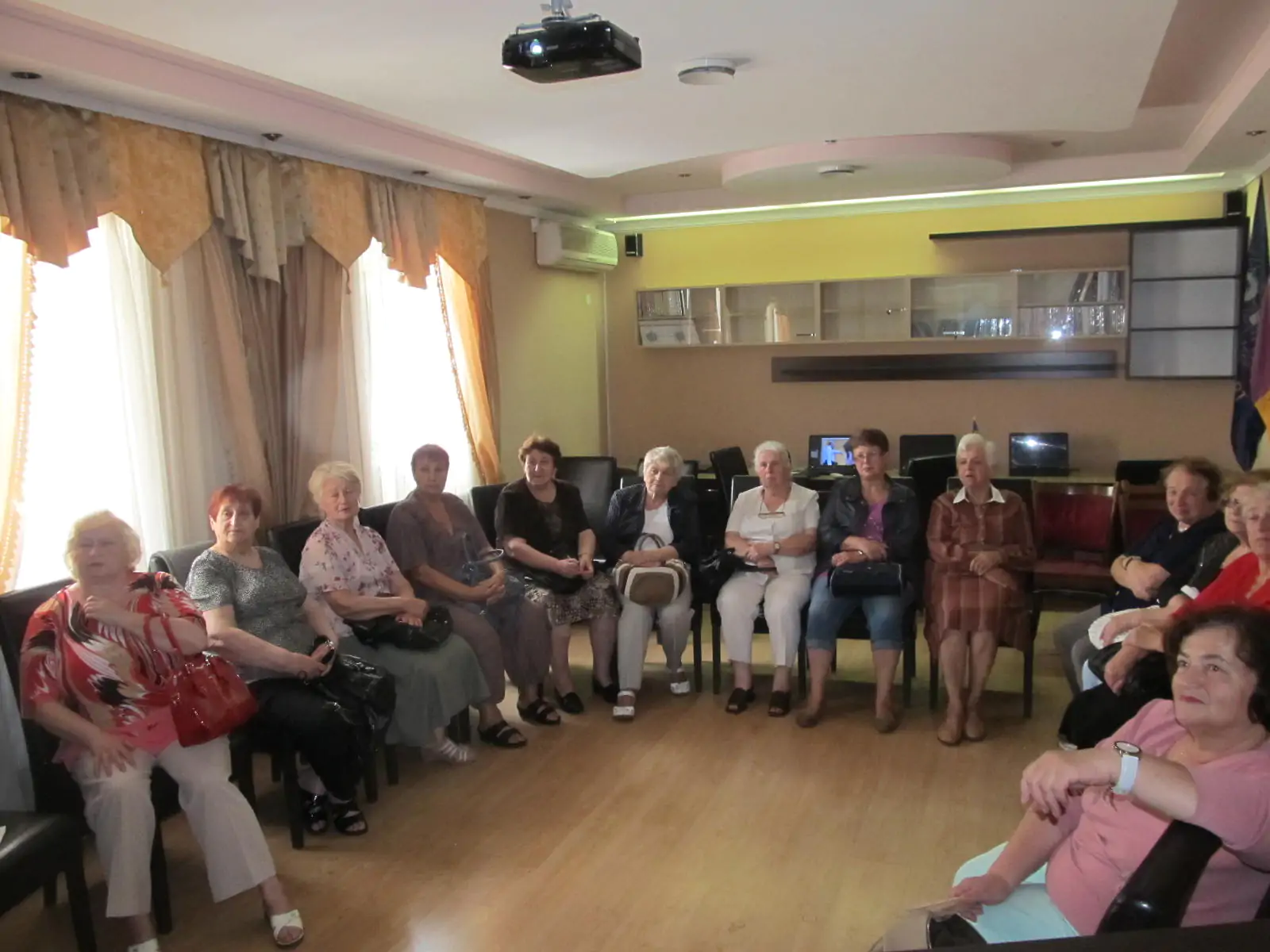
Today, the “Thia” Center once again talked about Tzdak and its importance in the life of the Jewish community. Halyna Atamanchuk’s class “Gmilut Hasadim” is in demand among clients and guests of the Foundation, as it well explains the role of the commandments in the Jewish community, touches on the concept of harmony in other cultures (“ikigai”, Japan), carries additional knowledge of traditions and even a little physiology. Therefore, more and more people are interested in this training and, accordingly, mention one of the Commandments, which “… is equal to all ten Commandments…” One of the points of the event is Rambam's interpretation of the importance of the Commandment. We provide this material so that more and more people can find out for themselves which way of giving Tzdak is closer to their heart:
“Rambam calls eight levels of Tzdak, one above the other. The highest level is to help a person when he has not yet fallen into need, but has only shaken. And then it is best to either give him a loan, or a gift, or help him find a job, invite him to companions. This is the highest form of charity.
Below that is when a person is in need and you give them before they ask.
Even lower than that – he has already asked, but you give him so that you don’t know who you are giving to, and he doesn’t know who he is taking from. How is this done? Usually in every community there is a person who manages the Tzdak fund. And if there is an absolutely trusted and intelligent person in your community, and he divides these as he sees fit. Only if you trust him 100 percent.
Below that is when you know who you are giving to, but he does not know who is giving to him. There were wise men who would quietly throw money at the entrance to the poor.
Even lower – when he knows who he is taking from, and you don’t know who is taking from you: he would throw a bundle of money behind his back, and those who needed it would come up and take it. Nowadays, this is dangerous.
Even lower – when you give it to him from hand to hand, but with a friendly face.
Even lower is when you give him less than he needs. And it's really bad when you give it with a sour expression.
How much should you give? Generally speaking, if you can, give him as much as he lacks to return to the standard of living to which he is accustomed. For example, the sages say: if he is accustomed to riding a horse so that a servant runs ahead, try to return him to this level. The Talmud tells an amazing story about how Hillel, the head of the Sanhedrin, found a horse, but could not find a servant for an impoverished man, and fled to a neighboring city alone, because a man is accustomed to having a servant. But if you do not have the opportunity to satisfy the entire deficiency, then give at least a part. Everyone should give tzedak, even a person who lives on alms, we will not talk about us. And there is a certain minimum that is required by the law of the Torah itself. If a person gives the minimum coin of the given time of his country every day, then he will fulfill the obligation from the Torah at the minimum. But in general, it is believed that every person should set aside a tenth of his income and save it to help the poor. If I can’t live on the rest of my 90%, I’m the first client to help the poor, but you just have to compare your needs. Because everyone is poor in their own way, everyone has their own problems: some have liquid soup, and others have pearls of chalk…”
Volunteers from the Khmelnytskyi “Community” branch actively participated in the seminars, demonstrating examples of Tzdakah and Mitzvah by their own example, helping to conduct them and talking about volunteering.
Source: http://www.machanaim.org/ustntora/_da-adam/tema-6b.htm
